1 kHz Sallen-Key
Low-Pass Filter
I designed and simulated a second-order, unity-gain active low-pass filter targeting a 1 kHz cutoff, then checked it with an AC sweep and an automated measurement.
Why I built it
I wanted practice turning a target frequency response into component values, and then proving the circuit behaves the way the calculation predicts.
Circuit design
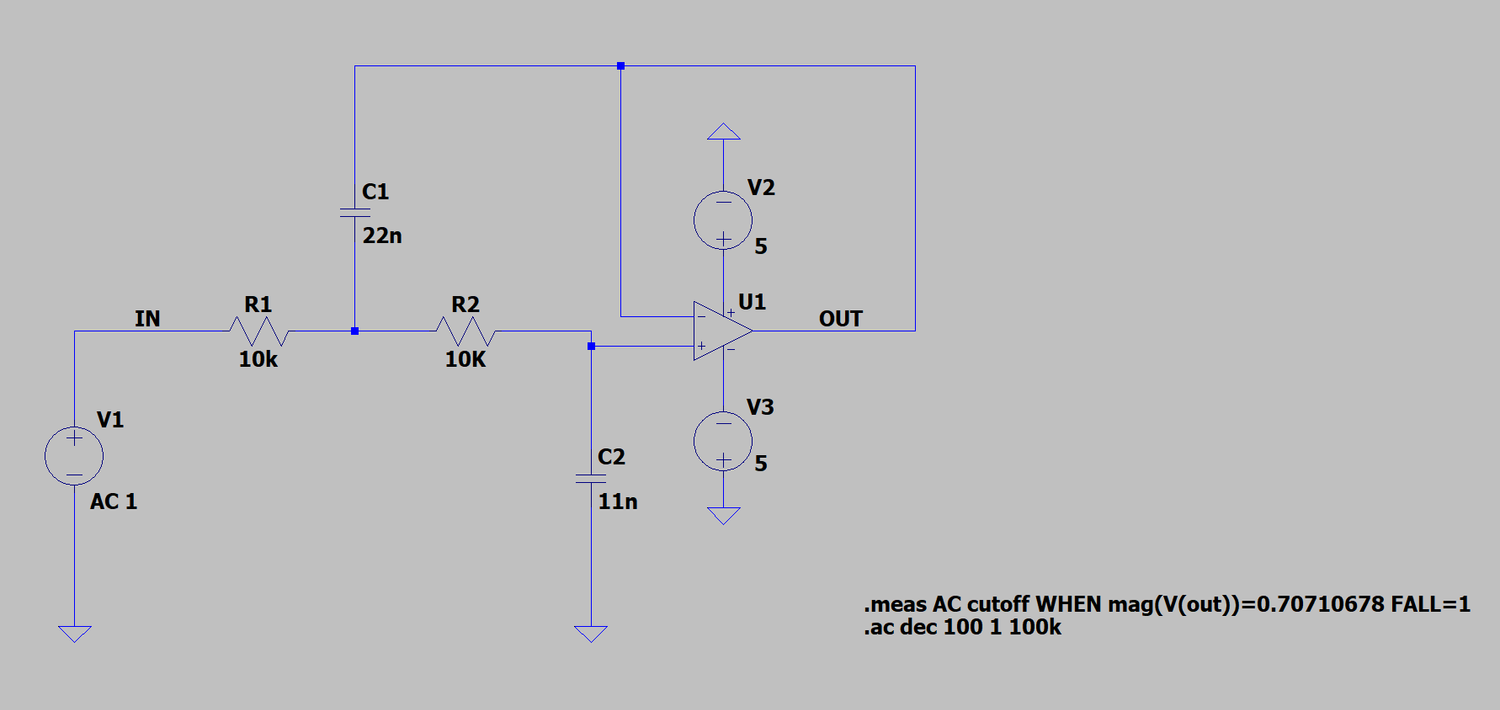
The math
With R1 = R2 = 10 kΩ, C1 = 22 nF and C2 = 11 nF, the cutoff frequency is
Verification
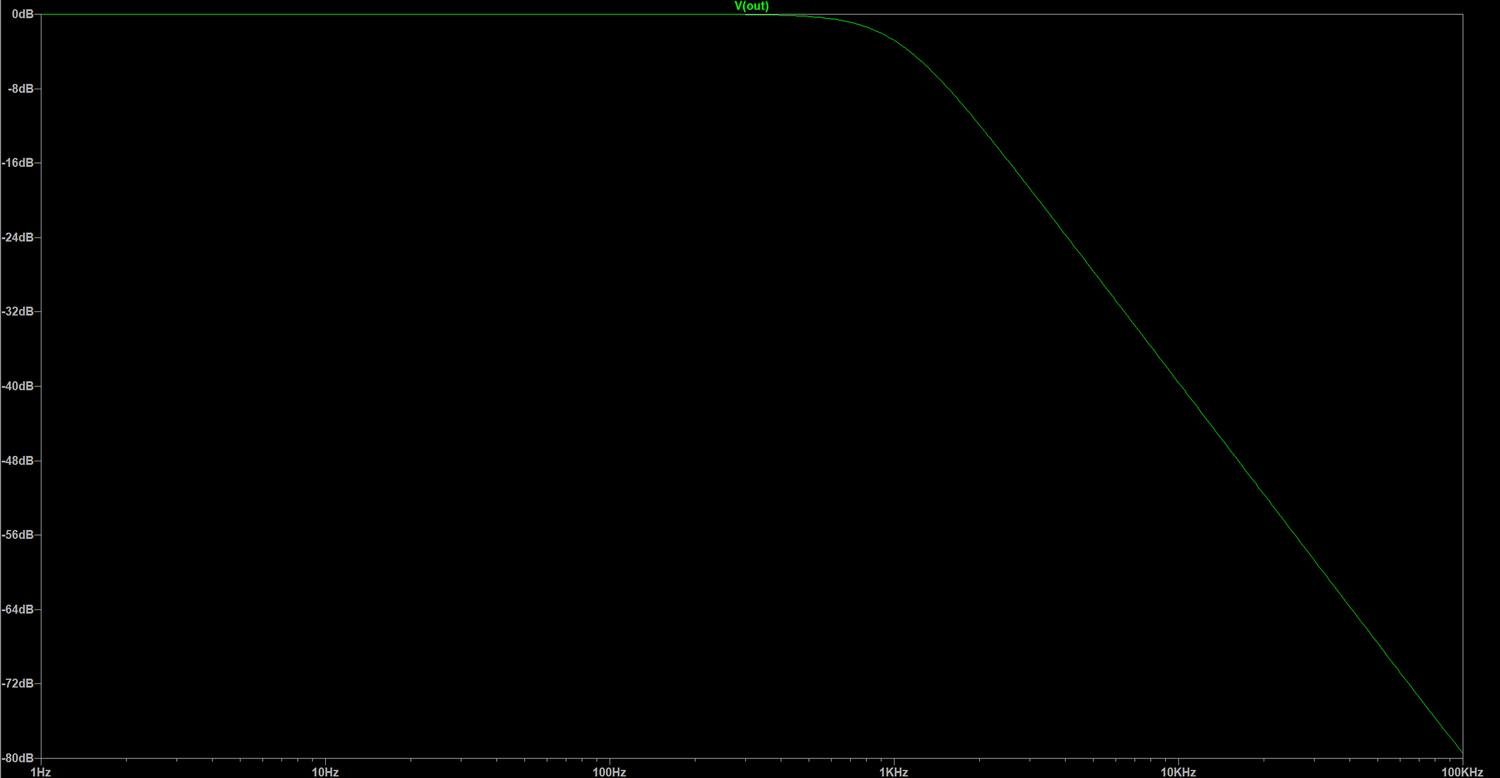
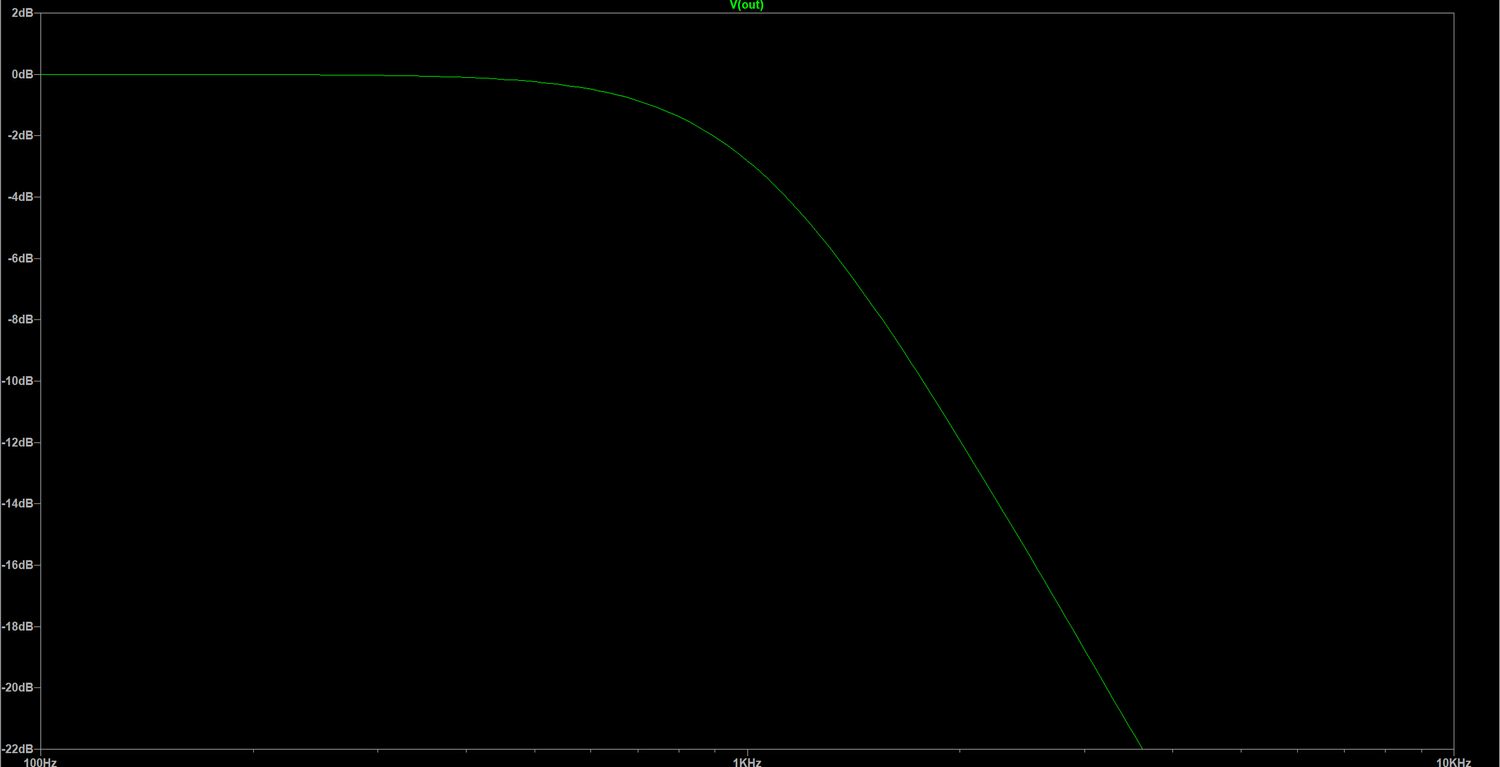
An AC sweep shows the classic low-pass shape: flat through the passband, then rolling off above 1 kHz. The close-up view makes the −3 dB region easier to see.
Cutoff-frequency measurement
Reading a cutoff off a graph is imprecise, so I used a .meas command to find the frequency where the output magnitude reaches 0.7071 (−3.01 dB).
LTspice-measured cutoff. That matches my hand calculation (≈1,023 Hz) and is 2.3% above the 1 kHz design target.
What I learned
- How to pick component values from a target cutoff frequency.
- How to build and sweep a circuit in LTspice and read the frequency response.
- How to use
.measfor exact results so I'm not estimating from a plot. - How to compare simulation against hand analysis to check my design.